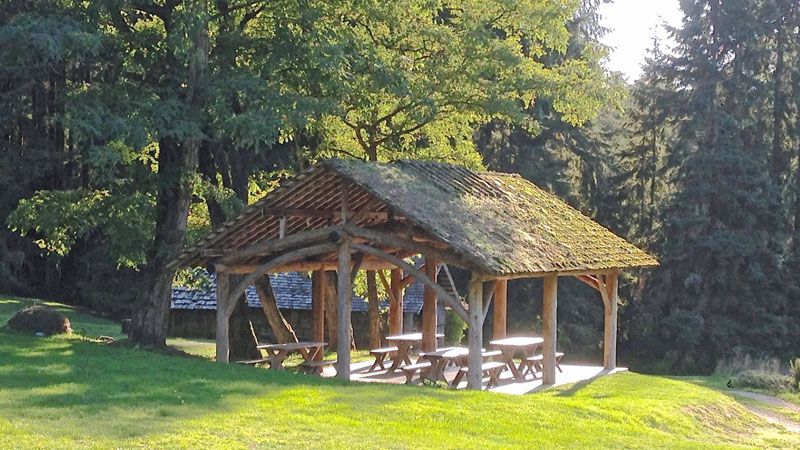
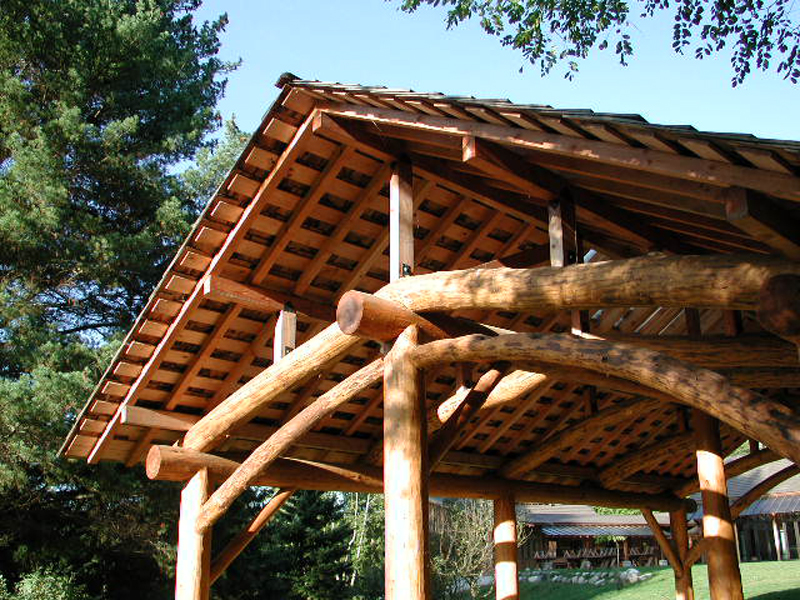
Soon after returning from Japan, Ross Chapin began work on the design of the Pavilion at the Whidbey Institute. While there was no direct cultural connection between Japan and Whidbey Island, Ross had been deeply moved by the material honesty of folk buildings he encountered in rural Japan. The Pavilion became a way to express this sensibility—rooted in place, shaped by the materials of the forest, and grounded in simplicity.
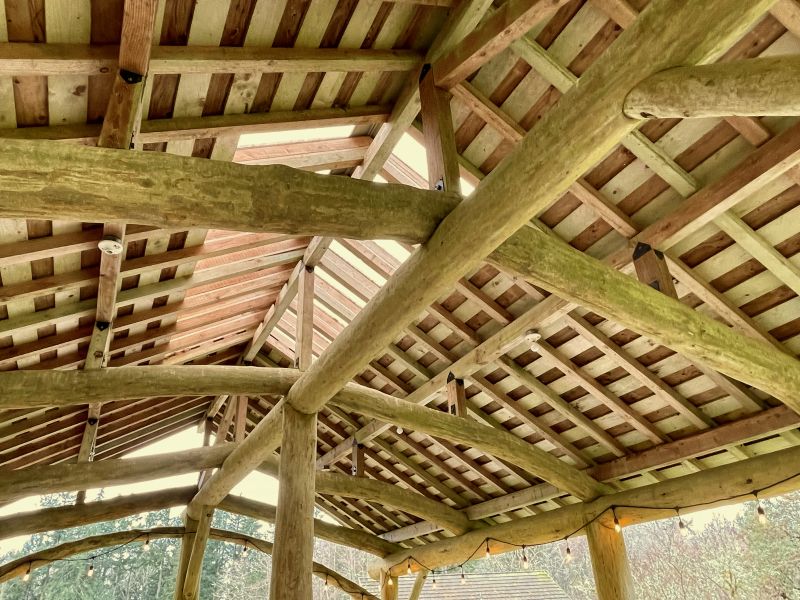
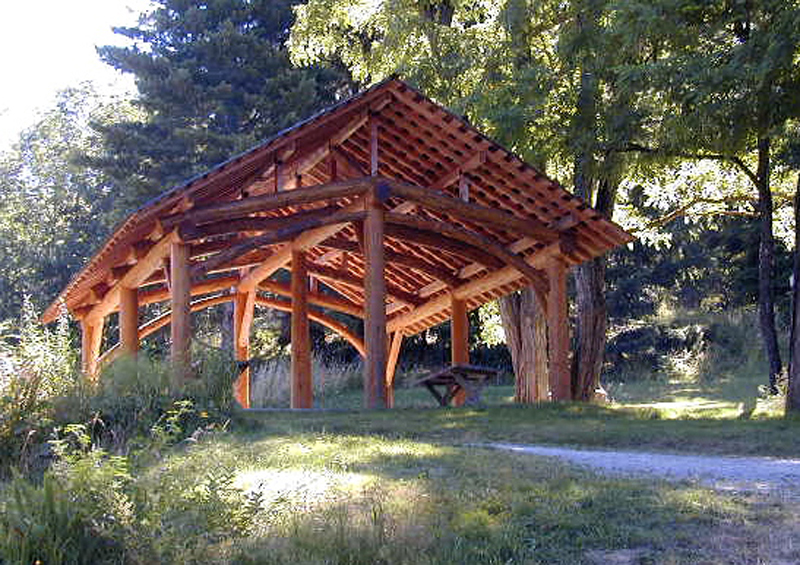
Inspired by the traditional Japanese approach to timber framing, the design follows a quiet hierarchy: from elemental, permanent materials at the base to increasingly refined and flexible elements above. This structure feels both grounded and elevated—earth-bound yet light.
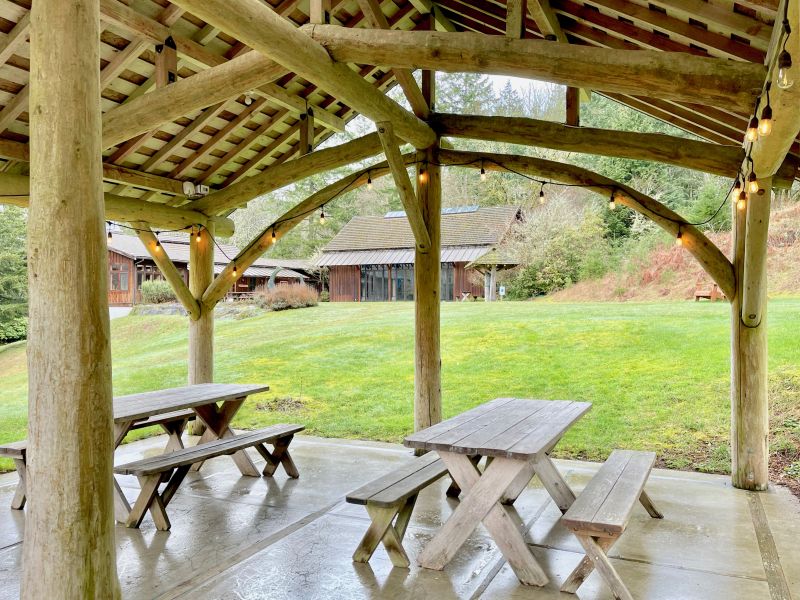
The primary posts and beams were peeled from trees on the land and left unhewn, bearing their natural texture and form. Cross beams, cut from bent trees, retain the gesture of their growth and maintain a living connection to the forest. Above, the secondary structure—support beams, joists, and paneling—shows increasing refinement, yet still honors the character of the wood.
In its structure and presence, the Pavilion is an embodiment of the land and the hands that shaped it. A simple, dignified shelter—open to the elements, yet full of intention.